
Design-for-manufacturability review to reduce cost, improve yield, and speed up quoting and production—especially for bent and welded assemblies
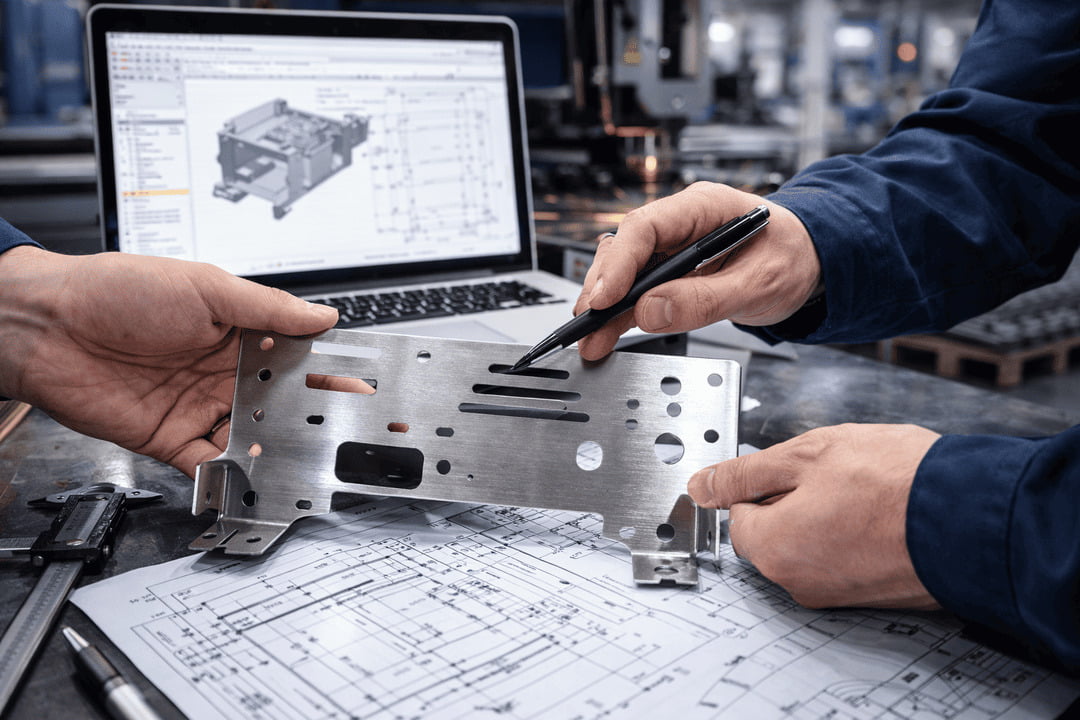
Capability Highlights
Bend rules review (radius, relief, interference)
Hole-to-edge and feature spacing checks for manufacturability
Tolerance strategy suggestions aligned with function
Weld sequence and distortion control recommendations
Finish/appearance requirements translated into manufacturable specs
Standard vs Extended Capability
Standard: DFM feedback during quoting to confirm feasibility and reduce obvious risks.
Extended: deeper optimization (cost-down alternatives, routing redesign, assembly/finish planning) supported on request, strictly per drawing and project scope.
Design Notes & DFM Tips
Mark cosmetic faces and functional interfaces clearly
Specify critical tolerances only where function requires
Provide mating part context (where does it fit?) for better suggestions
Confirm finish requirements and masking early
Use STEP + 2D PDF to avoid interpretation errors
Quality & Inspection
Inspection per drawing requirements
Reports available upon request (FAI/COC, etc.)
RFQ Checklist
STEP/IGES + dimensioned PDF
Material + thickness + target quantity range
Key fit interfaces and critical-to-quality features
Finish/cosmetic requirements
Welding requirements (if applicable)
Any compliance/testing needs (if applicable)
FAQ
Q: Is DFM included in the quote process?
A: Often yes for feasibility; deeper optimization is available on request.
Q: Can you suggest cost-down alternatives?
A: Yes—process/material/finish trade-offs can be proposed based on your goals.
Q: What do you need for a DFM review?
A: STEP + PDF, material/thickness, quantity range, and critical features.
Q: Will DFM change my part function?
A: Recommendations aim to preserve function while improving manufacturability—final decision is yours.