
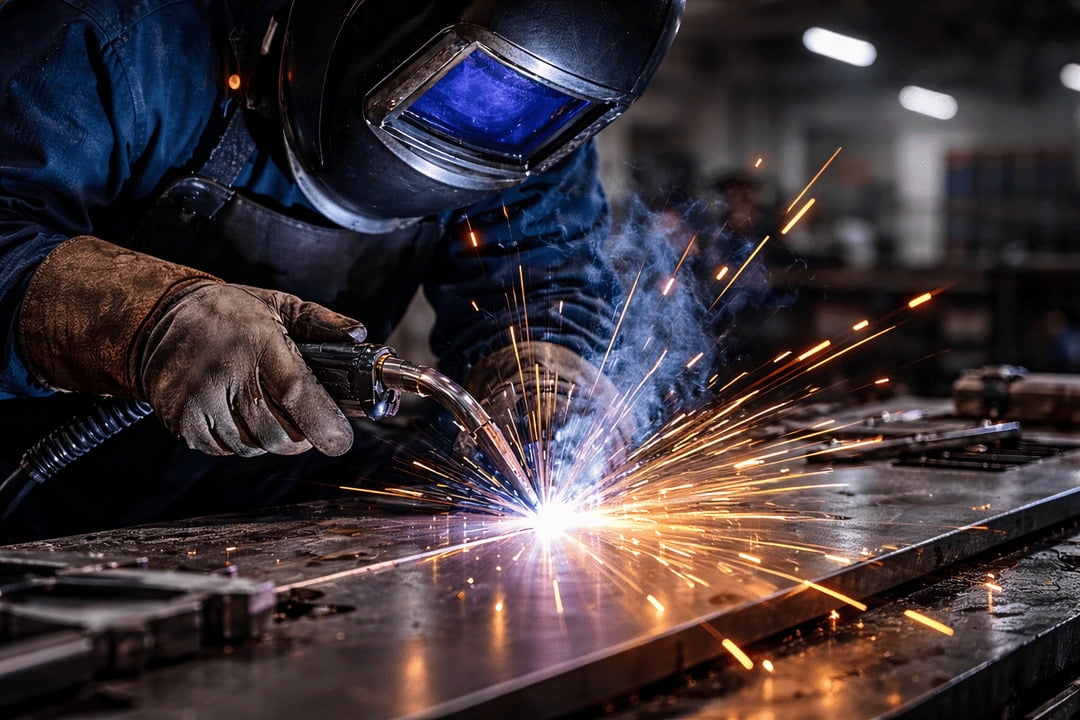
Welded sheet metal and tube assemblies with strong joints and controlled distortion—TIG welding is our key strength.
Capability Highlights
TIG (GTAW) for clean, controlled welds on precision parts
Laser welding available for low distortion and consistent seams
MIG (GMAW/CO₂) for efficient structural welding
Distortion control through process planning and fixturing
Weld appearance managed per cosmetic requirements
Standard vs Extended Capability
Standard: TIG/laser/MIG welding for common sheet metal and tube assemblies.
Extended: cosmetic weld standards, special joint requirements, or complex assemblies supported on request and per drawing.
Design Notes & DFM Tips
Indicate cosmetic surfaces and visible weld areas clearly
Use consistent joint types and add access for welding torch reach
Avoid over-constraining tolerances on welded structures (stack-up risk)
Define flatness/straightness only where functionally critical
For finishing: clarify welding-before-finish sequence and masking needs
Quality & Inspection
Inspection per drawing requirements
Reports available upon request (FAI/COC, etc.)
RFQ Checklist
STEP/IGES + PDF (preferred)
Material (sheet/tube) + thickness
Weld type preference (TIG / laser / MIG) if any
Cosmetic requirements / visible surfaces
Quantity and assembly notes
Finish requirements and sequence
FAQ
Q: Do you provide TIG welding for stainless and aluminum?
A: Yes—TIG is a core capability.
Q: Can you meet cosmetic weld requirements?
A: Yes, per defined standards—please mark visible areas and expectations.
Q: How do you control distortion?
A: Method selection, fixturing, and process planning based on geometry.
Q: Can you weld copper?
A: Possible on request, depending on design and requirement.